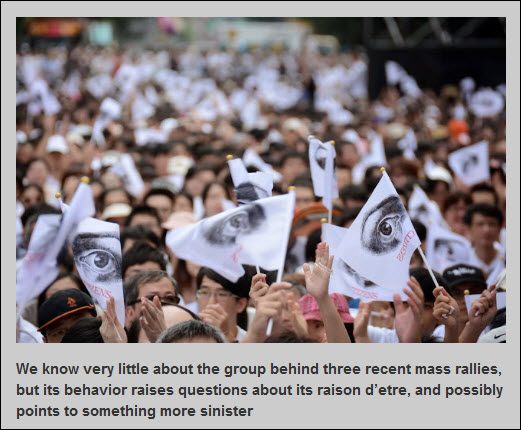
When it comes to encouraging Taiwanese to come out and protest or do something for their country, there is never too many people, and the more groups come together to fight for a common cause, the better. But what if some organizations were used not to increase pressure on the government by amplifying a movement, but rather to divide, isolate, and turn society against the elements that are the most threatening to the authorities?
Having attended all three mass rallies organized by Citizen 1985, I (as have many other journalists in recent days) cannot help but feel that the group may very well be intended as a means to prevent the emergence of a force large and united enough to compel the government to change its policies.
This might come across as counterintuitive: after all, no organization in recent years has been as successful as Citizen 1985 in bringing together hundreds of thousands of people at protests — the first two over the death of soldiers in the military, and the last one against poor governance in general during the Oct. 10 “National Day” celebrations. All three occasions were well-rehearsed and lavish affairs, what with the seas of white shirts and flags, large projector screens, emotional soundtracks, and so on. When we contrast those with the much smaller rallies organized by, say, laid-off workers or groups that advocate change in land-management regulations, the Citizen 1985 rallies win hands down, if only in their ability to generate media attention.
However, if we scratch below the surface of the hours-long Citizen 1985 protests, we quickly realize that they are vapid affairs — beyond the catchy slogans, there is little substance, the “ask” lacks focus, and there is little follow-up. This is markedly different from the protests organized by student movements, academics and NGOs that we have seen in the past year, which tend to be much more policy-oriented, well-informed, rigorous, sustained, and which, if successful, have a much better chance of effecting change in how the government manages those issues.
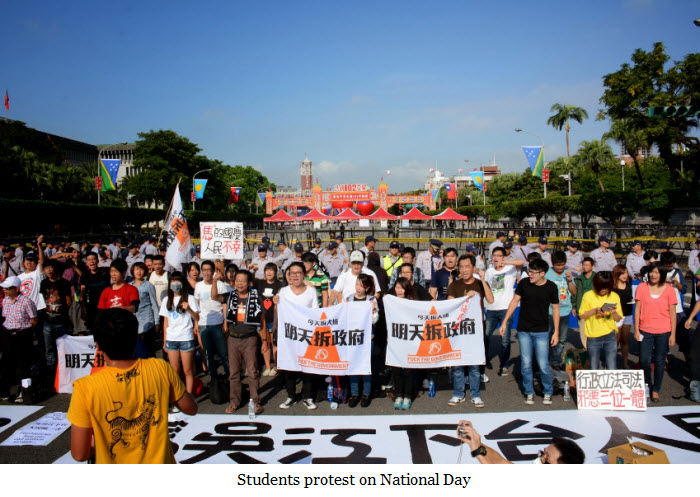
Another important point is the fact that the academics and students who have been mobilizing are known commodities: we know who they are, where they met, which academic institution they are affiliated with, and so on. As for the people behind Citizen 1985, we know next to nothing: we know that they purportedly met in Internet chat rooms and that the group is named after the armed forces’ hotline. In fact, the masterminds have kept their identities obscure, claiming they are doing so to avoid shifting attention away from the object of the protests (an accusation, unfair in my view, leveled against charismatic student leaders like Chen Wei-ting and others). We also don’t know where they obtain the not insubstantial sums of money that are needed to organize such lavish events; surely the NT$100 bills that I saw in the collection boxes during the event on National Day aren’t enough.
Yet another worrying element, and what has been the most significant factor in my reluctance to regard Citizen 1985 as a serious force for change, is the organizers’ emphasis on non-violence and their repeated depiction of the other groups as “violent” and “irrational.” “We are not like them,” one of the leaders told the crowd on National Day as the 60,000 top 100,000 protesters headed for Chiang Kai-shek Memorial Hall, referring to the other organizations that were holding rallies in the area. “We are high-class protesters,” as if the others were “low class” and “uneducated,” when in fact the majority of them are graduate students from the nation’s top universities. The organizers also tend to be control freaks, to the point where even journalists have limited freedom to walk around and do their work.
Why to constant attempts to portray other groups as violent, which isn’t only divisive but, based on my observation of several dozens of their protests in the past year, unfair and misleading? This could simply be the result of competition and jealousy; it could also be part of a more nefarious attempt top discredit the forces that are most likely to destabilize the government. It is interesting that such claims also echo what the government and police forces have been saying about the groups that have mobilized against forced demolitions, the cross-strait services trade agreement, and other issues.
Here it would be tempting to fall into conspiracy theories, but another point worth making — and this again comes from my observations at the scene — is the fact that the relatively small protests organized by the student groups inevitably attract large police forces, more often than not in riot gear. Yesterday morning near the East Gate on Ketagalan Boulevard, a group of no more than 100 students was surrounded by an equal amount of cops bearing shields. The same situation prevailed during the removal of students in front of the Presidential Office after midnight earlier this week. At most of their rallies, the cop-to-protester ratio has always been unusually high for a democracy, and the police has often been willing to forcefully remove the protesters.
But when Citizen 1985 gathers several tens of thousands of protesters, the police force almost evaporates. This was true during the first protest near the Ministry of National Defense on July 20, followed by the big one on Ketagalan Boulevard on August 4, and the one held near the Legislative Yuan and later at CKS Memorial Hall on National Day. How can we explain that? One possibility is that the organizers struck a deal with the authorities and assured them that nothing untoward or threatening would happen. This could very well account for my earlier remark about the control freaks among them, who were on the lookout for “troublemakers” in their midst on August 4. Especially on a day like National Day, where a highly unpopular president was hosting celebrations nearby, assurances that tens of thousands of protesters, who could very well have joined the students on Ketagalan Boulevard, would be redirected away from the scene, contained, and put to sleep with hours of speeches, must have come as a relief to the police force and the government that pays them.
With all this, it is possible to conclude that Citizen 1985 is meant to serve a number of functions, all of which beneficial to the government. It can serve to discredit the organizations that are more focused, more militant, and therefore the likeliest to compel the government to change policies that it does not want to change; it can turn public opinion against the students by depicting them as violent, disrespectful, irrational, and not “high class” enough; it can redirect resources that otherwise would have joined the student movements and thereby assist law enforcement when it faces overstretch; and lastly, it can serve as an opiate by giving society the impression that they are participating in something meaningful, when in fact they are all sheep (they do, after all, wear white) gathering for rallies that the government need not fear and which, in the end, will not lead to policy change. And if nothing happens after hundreds of thousands of people have rallied a number of times, the public could well give up and come to “accept” the inevitability of government policies, or the impossibility of change.
Taiwanese civil society cannot afford to turn down allies. But it must also make sure that those who claim to support their cause are in fact on their side. (Photos by the author)
The Far-Eastern Sweet Potato / 2013-10-11
==================================================================
漢字翻譯: By 一心
《臺北時報》英文版副主編寇謐將對公民 1985 行動聯盟主導了三場大規模集會遊行,提出質疑,以下是 Citizen 1985: The real deal, or a false flag? 全文譯文。
==================================================================
公民1985:來真的,還是偽旗設局?
對近來主導了三場大規模集會遊行的這個團體,我們所知甚少,其行為模式,令人對它之所以存在啓疑,而且,可能涉入某種陰險。
說到鼓勵台灣人挺身而出、抗議,或者為國家做些什麼,人,永遠不嫌多,而且,越多團體結合起來,為同樣的理由而戰,當然越好。然而,如果有些團體透過放大某個運動,為的是不增加政府的壓力,反而是去分化、孤立、帶動社會反對那些最能威脅當權者的元素呢?
參加過《公民1985》策畫的三場集會以後,我(與最近其他許多記者一樣)無法不感覺到,這個團體的用意,其實是為了防範一個真正夠大、夠團結、足以迫使政府改變其施政的力量出現。
這聽起來可能有點反直覺:畢竟,近年來,沒有一個組織可以像《公民1985》,如此成功地號召數以萬計的人一起參與示威,前兩場是為了軍中士兵之死,最後一場,是在十月十日「國慶日」反對政府蹩腳的施政,這三場都是經過完整彩排、所費不貲的活動,有白衫和白色的旗海,大型投影幕,激情的配樂…等等。跟那些小型活動比起來,比如說關廠工人,或者要求停止土地浮濫徵收的團體,《公民1985》毫無疑問地勝出,即使只就媒體吸晴的能力來說。
然而,如果挖掘《公民1985》幾個小時活動的表層底下,我們很快就會發現,這些活動的空洞本質──除了動聽的口號以外,根本沒有內容,所謂的「訴求」缺乏聚焦,而且幾乎沒有後續。這是《公民1985》和其他社運團體最明顯的不同,學運、學術界和非政府組織所主導的抗議,都有政策導向、資訊充足、嚴謹、永續,成功的話,比較有機會影響政府處理相關議題。
另一個重點實情是,參與運動的學者和學生們都是有名有姓的:我們知道他們是誰,怎麼相遇,跟哪些學術機構有關聯等等。至於《公民1985》背後的人,我們所知幾近於零:我們知道的是,據稱他們是透過網路認識,而團體名稱取自軍中熱線,事實上,這些主導者宣稱,他們隱埋身分的理由是不要模糊訴求焦點(但依我看來,這形同對像陳為廷這樣有魅力的學生領袖,做不公平的指控。)他們辦理這樣繁複的活動需要不少的一筆錢,我們也不清楚究竟從哪裡來;可以確定的是,光靠國慶日那天捐款箱中的百元鈔票,是不夠的。
還有一個令人擔憂的因素,也是使我無法把《公民1985》看成真心想要改變的力量,其中最顯著的因素,那就是主辦單位強調非暴力,以及,不斷地把其他團體描述成「暴力」和「非理性」。當六到八萬的遊行民眾出發前往中正紀念堂時,其中一位主持人對大家說:「我們跟他們不一樣。」他們,指的是其他在附近區域抗議的團體,「我們是高檔次的抗議者,」彷彿其他團體都是「低檔次」、「沒有受教育」的,而其實,他所指的那些人,大部分都是國內頂尖大學的研究生。主辦單位很像控制狂,連記者們到處走動、採訪的自由也都受限。
為什麼要不斷地把其他團體形容成暴力的?這不只會分化,而且,就我親身觀察這些團體幾年來的抗爭,這樣的指控是不公平、而且會誤導的。這可能是出於競爭和嫉妒,但也可能是一個更惡毒的意圖──抹黑這些最有可能動搖政府的力量。有趣的是,這些指控,恰好呼應了政府和警方對於那些反迫遷、反服貿協議等團體的指控。
在此,很難不落入陰謀論,不過,另一個值得探討的論點是──這也是根據我在現場的觀察──那些比較小型的抗議活動,總是吸引了大批警力,而且,通常有鎮暴配備,昨天早晨,在凱道東門(景福門)前,不超過100名的學生,被數量相當、戴著盾牌的警察所包圍。同樣的情況,也發生在幾天前的午夜,警方把學生從總統府前驅離。學生們大部分的抗議活動中,警方和抗議者的比例,在民主國家來說,都不尋常地高,而且,警察們通常都執行強迫驅離。
然而,當《公民1985》聚集了上萬的抗議者時,警力幾乎蒸發了,7月20日在國防部附近的第一場抗議就是這樣,接著8月4日在凱道的第二場大型示威,也是如此,在國慶日立法院附近還有接下來到中正紀念堂,都是如此。這要怎麼解釋?一個可能性是,主辦單位跟主管單位協調過,保證不會有任何不合宜或具威脅性的事情發生。這可以解釋我之前提到的控制狂行徑,在8月4日那天,很多人都在找「麻煩製造者」。尤其在國慶這樣的一個日子,當一個極度不受歡迎的總統,在附近舉行著慶典時,這些原本可以加入抗議學生們、在凱道上集結的上萬民眾,卻被調開來、被控制得好好的,在數小時的演講中沉沉入睡。對於警方以及付他們薪水的政府來說,想必如釋重負。
綜合以上各點可以結論出,《公民1985》的幾個存在功能,全都對政府有利:它可以抹黑那些更聚焦、更激進、也更有可能促使政府改變政策的團體;它可以將輿論導向學生的對立面,指摘學生們暴力、不禮貌、不理性、不夠「高檔次」;它移轉了原本可以流向學生運動的資源,因而協助了公權力的濫權執法;最後,它提供了麻醉劑,讓人們以為自己參與了某種有意義的行動,而事實上只是像綿羊(畢竟,大家都穿白色)聚集起來,做一次政府毋須害怕也不會造成任何政策改變的示威抗議。如果上萬民眾上街幾次之後,什麼都沒有改變,人們很可能就放棄了,然後「接受」那些政策是無可避免的,或者,改變是不可能的。
台灣的公民社會承擔不起拒絕盟友,然而,也必須確認,那些宣稱支持公義的,事實上,是否真的站在他們那一邊。
三際信息站 2013-10-14
【延伸閱讀】
![[爆卦] 我在1985看到的、聽到的-◎chung928 (強強)- 台灣e新聞](http://www.taiwanenews.com/picture/s619.jpg)